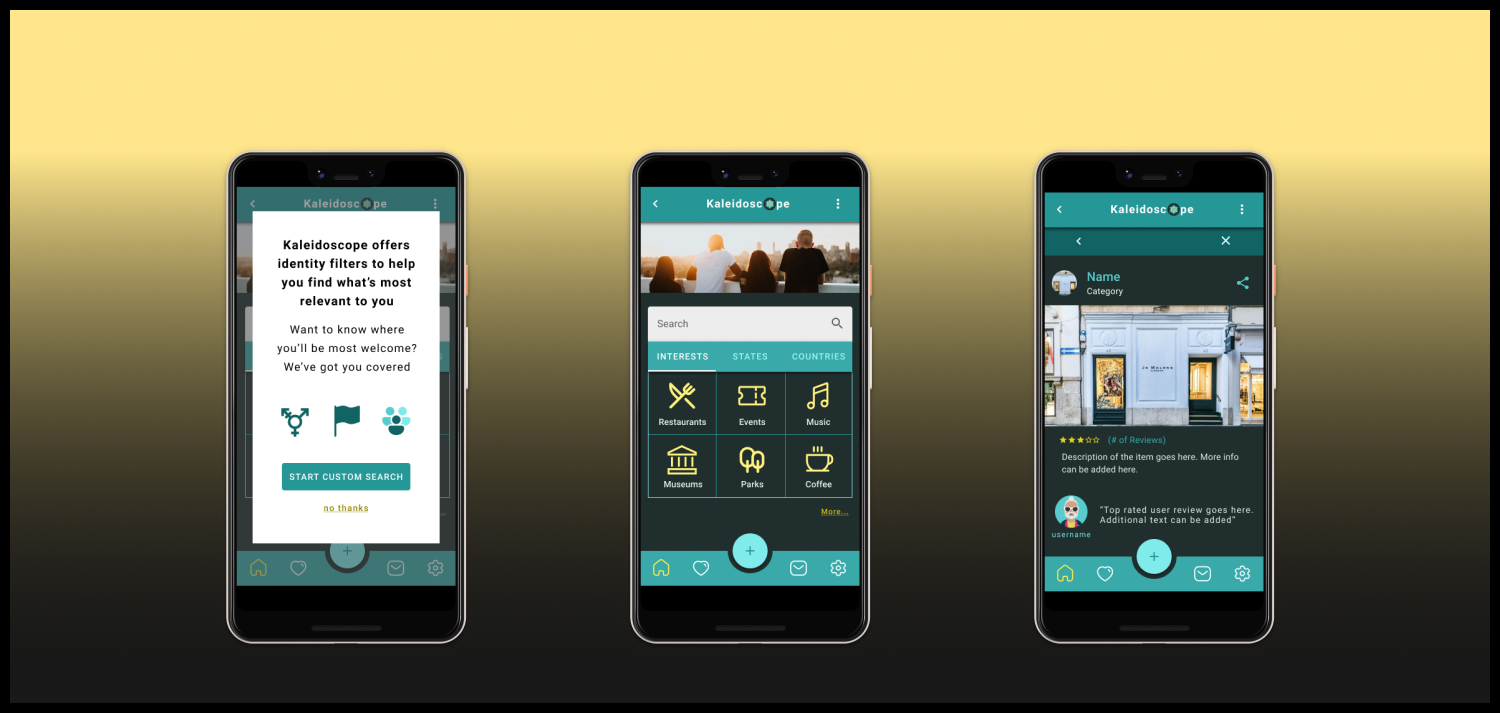
Mobile App Case study: Kaleidoscope
-
The Problem
People belonging to marginalized identity groups have to go out of their way to plan for safety when traveling. How can we make this research data more accessible so that users feel safe and supported during their travels?
-
The Solution
Kaleidoscope is a rank and review based app that rates destinations on how welcoming they are towards LGBTQ+ and BIPOC folks. Users can share their experiences, see reviews from other community members, and plan their next trip all in one place.
-
My role
Researcher, UX/UI Designer
Individual Project
Tools: Miro, Zoom, Figma, Invision
Timeline: 4 Weeks
Research
I began by developing an interview script based on the way users were currently planning their travels and what influenced their decision making process. My core research questions were:
What makes people feel unsafe during travel experiences?
Is it easy to research travel and safety concerns?
Do people feel adequately prepared with their current planning process?
I completed 6 interviews, choosing participants belonging to identity groups who could most benefit from a safety focused travel app. I then created an affinity diagram based on the interview responses and found the following missed opportunities:
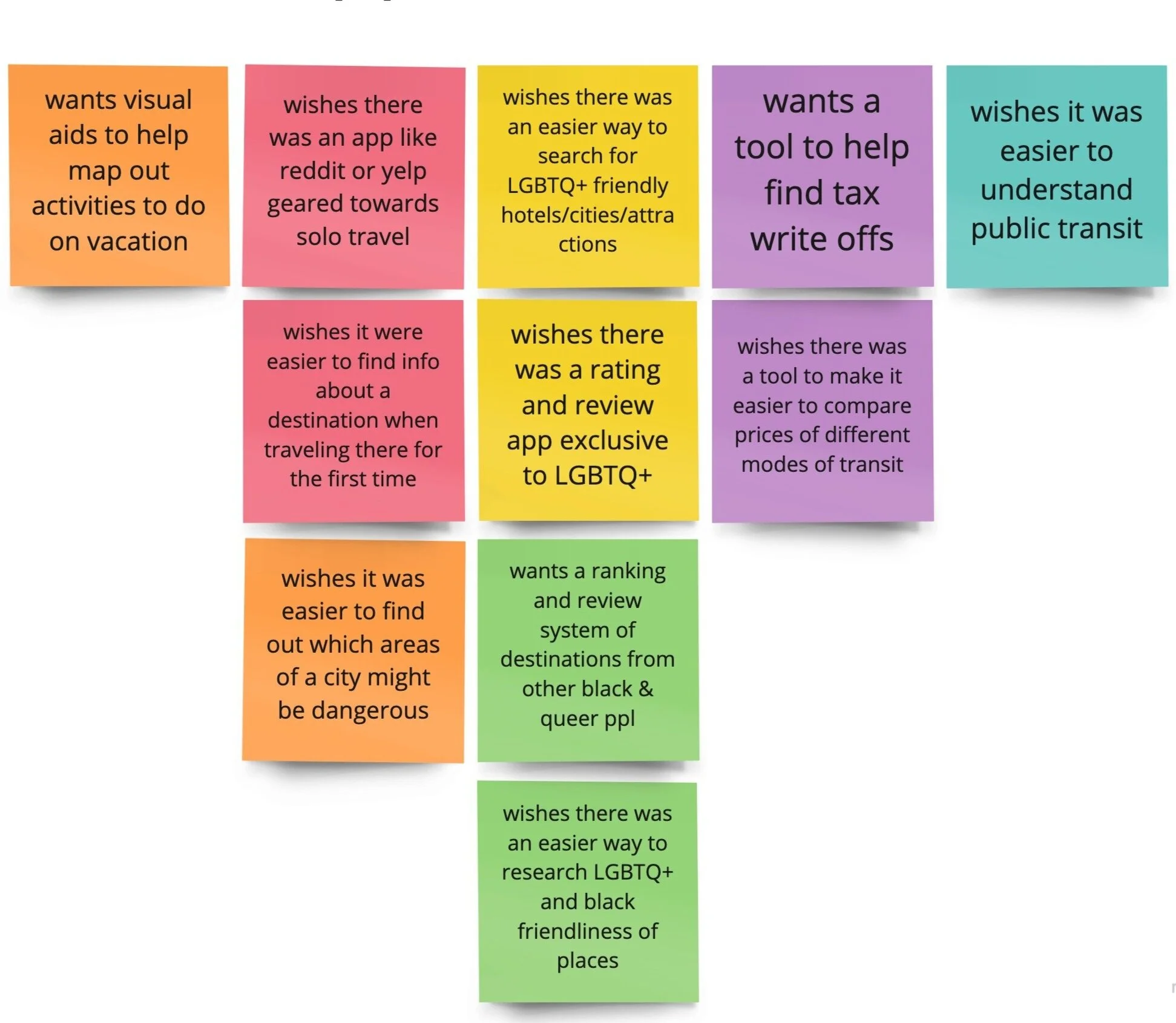
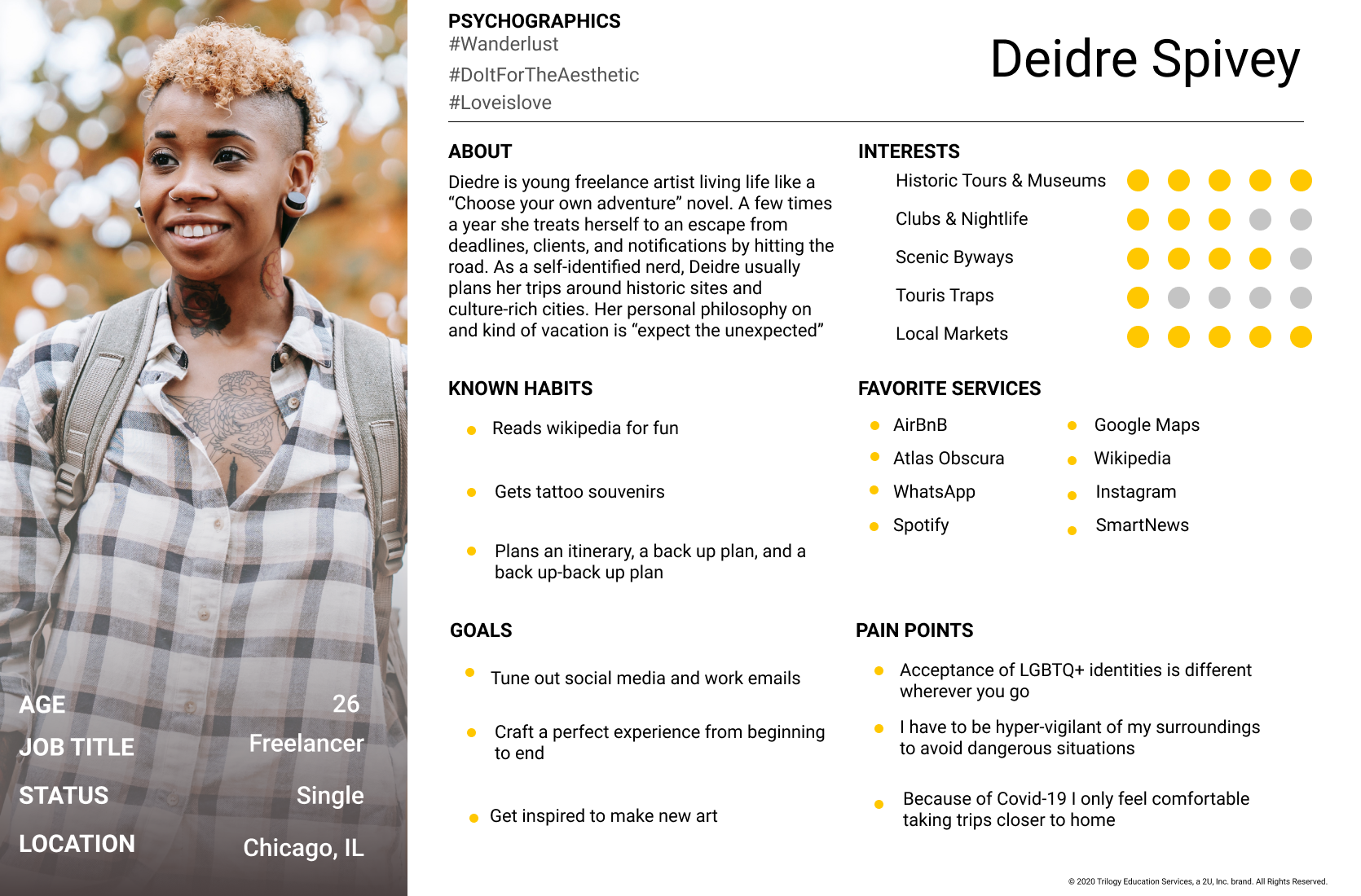
Once I landed on these key findings, I was able to synthesize an empathy map and user persona to understand my target users.
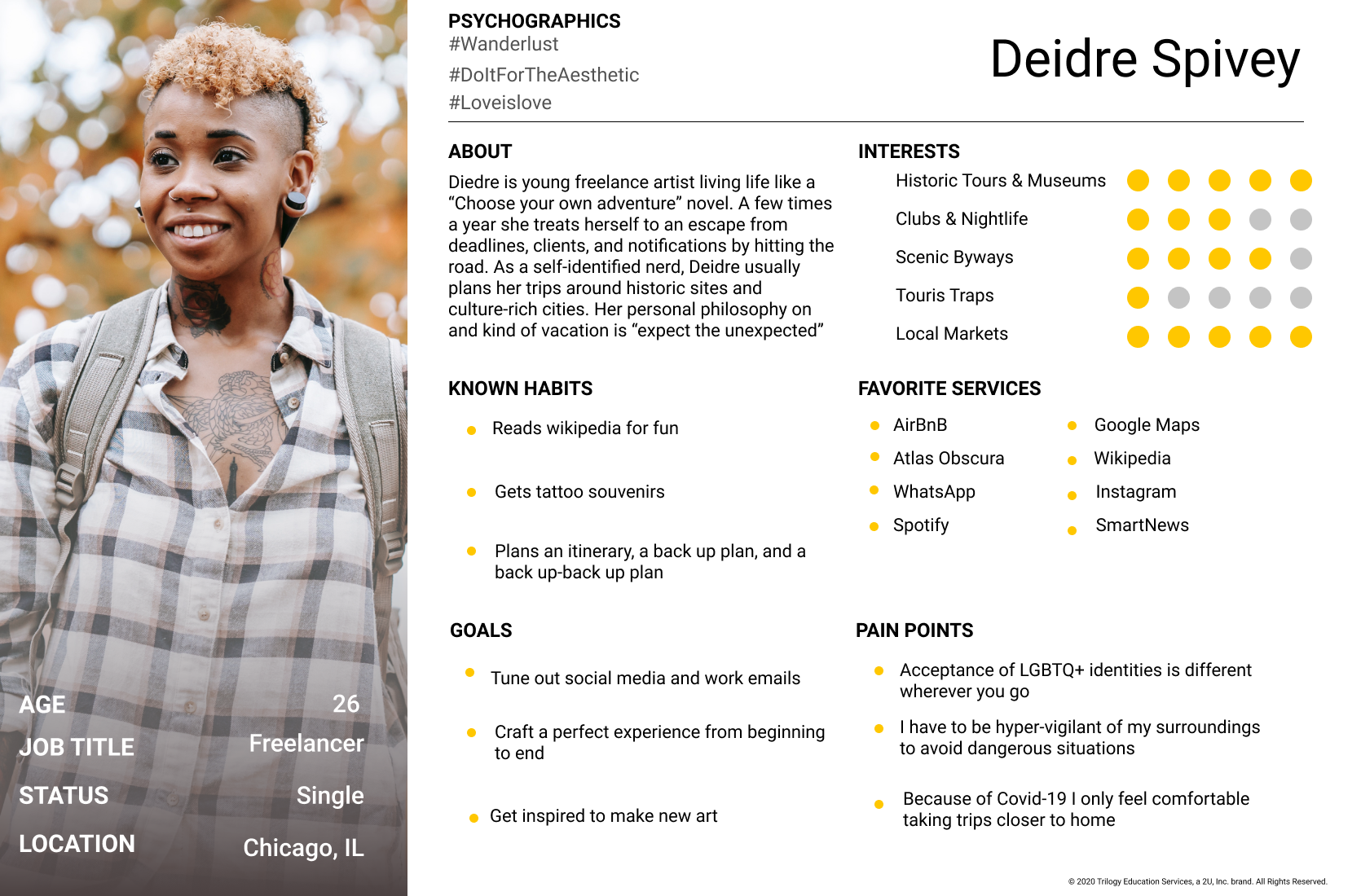
This is the problem my users are facing:
Travel for those in LGBTQ+ and BIPOC communities can be fraught with discrimination and violence. Therefore, they need to research the politics and cultural attitudes of their potential travel destinations. How might we make this type of research data more accessible so that marginalized identity groups can feel safe and supported when they travel?
Definition & Ideation
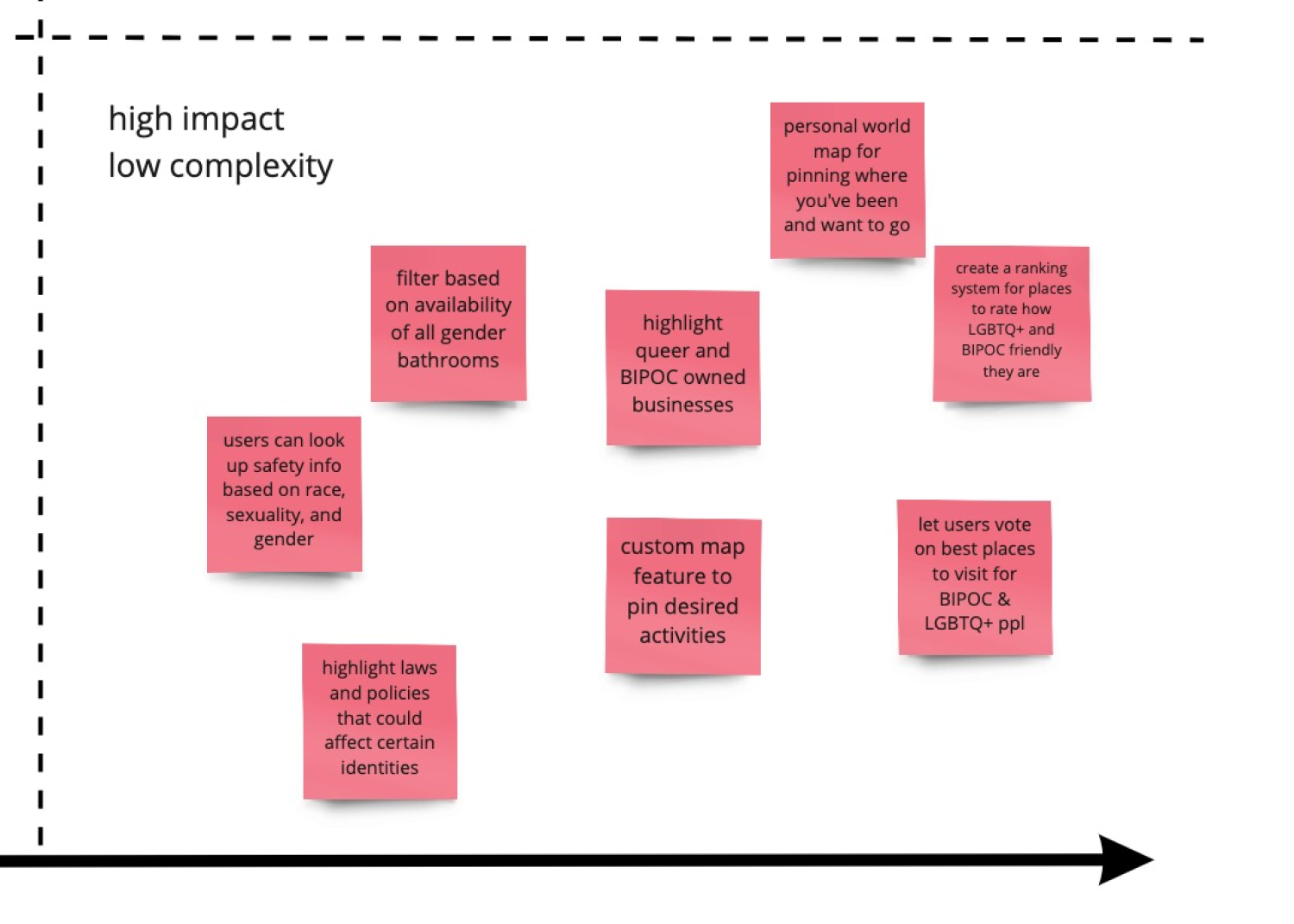
I brainstormed solutions to this problem using the “I like, I wish, what if” method, then placed my ideas into a feature prioritization matrix.
I conducted a SWOT analysis of 3 direct competitors and 2 indirect competitors.
Yelp
TripAdvisor
The International LGBTQ+ Travel Association
Out Traveler
Google Maps
Yelp, TripAdvisor, and Google Maps all share nearly identical rating & review systems. TripAdvisor however combines those search & review features with custom mapping and more active travel planning. IGLTA.org has a wealth of research related to LGBTQ+ specific travel. Our app would aim to combine the usability of TripAdvisor with the data of an organization like IGLTA so that our users can plan and research all in one place.
Based on my feature matrix and competitor analysis, I developed this value proposition:
Kaleidoscope is developing an evolving database to help LGBTQ+ and BIPOC individuals to solve the scarcity of reliable information about whether businesses and other places to visit are welcoming and supportive of diverse identities.
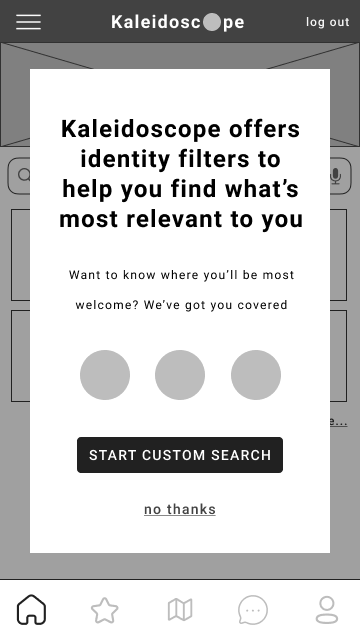
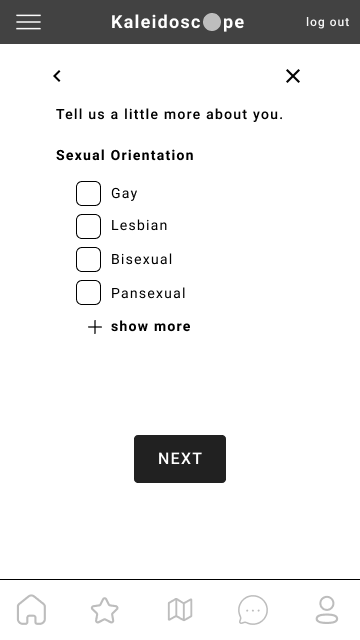
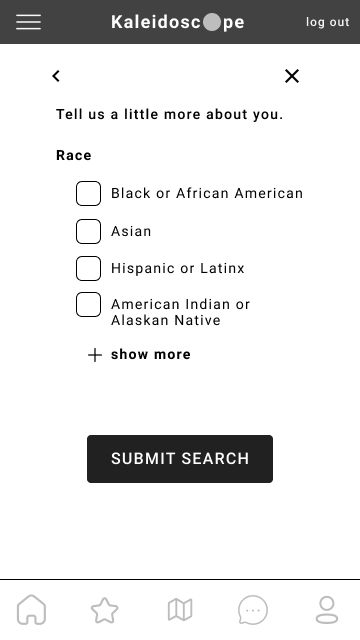
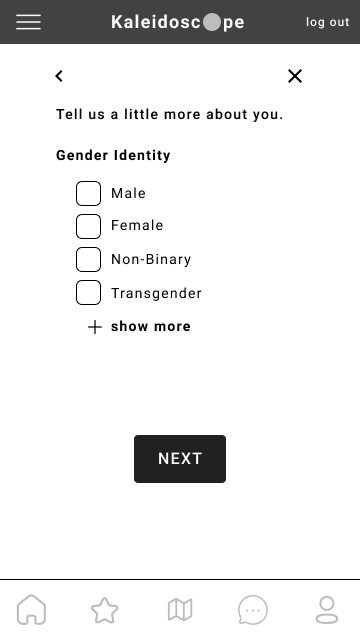
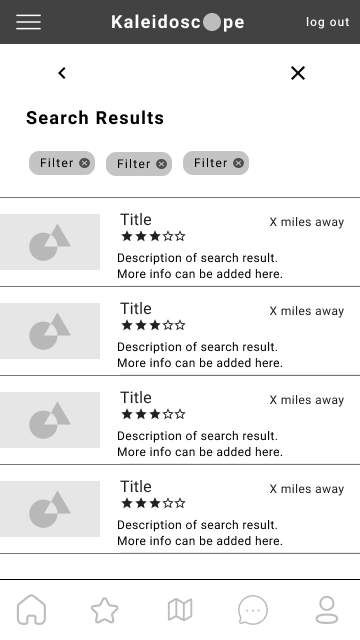
We offer a unique filtering system that lets users search for the safety rating of a place on the basis of race, sexuality, or gender.
In addition to verifiable data provided by our researchers, our dedicated user base ranks and reviews destinations based on their own experiences.
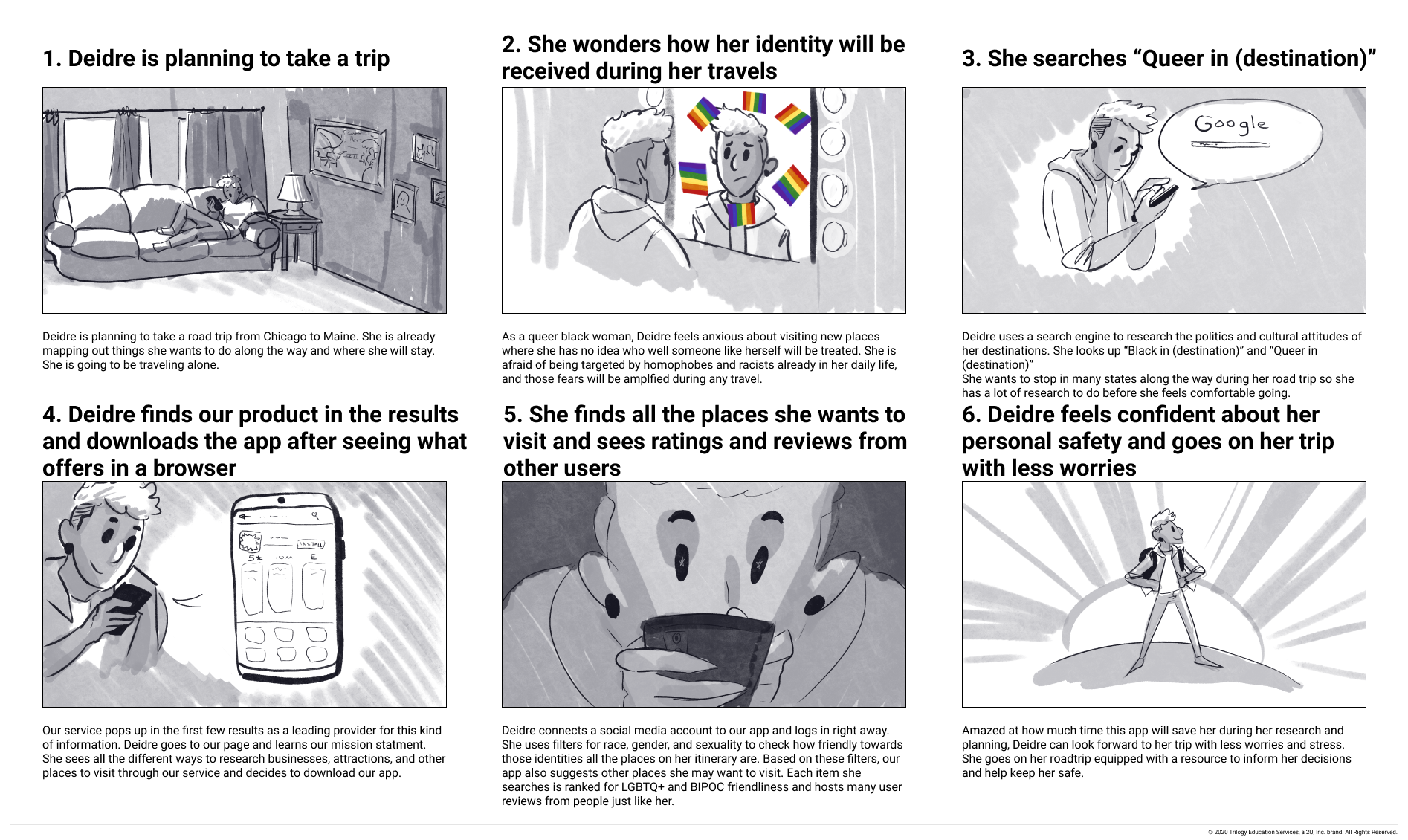
I imagined a scenario in which my persona might utilize an app like Kaleidoscope via storyboard.
Prototyping
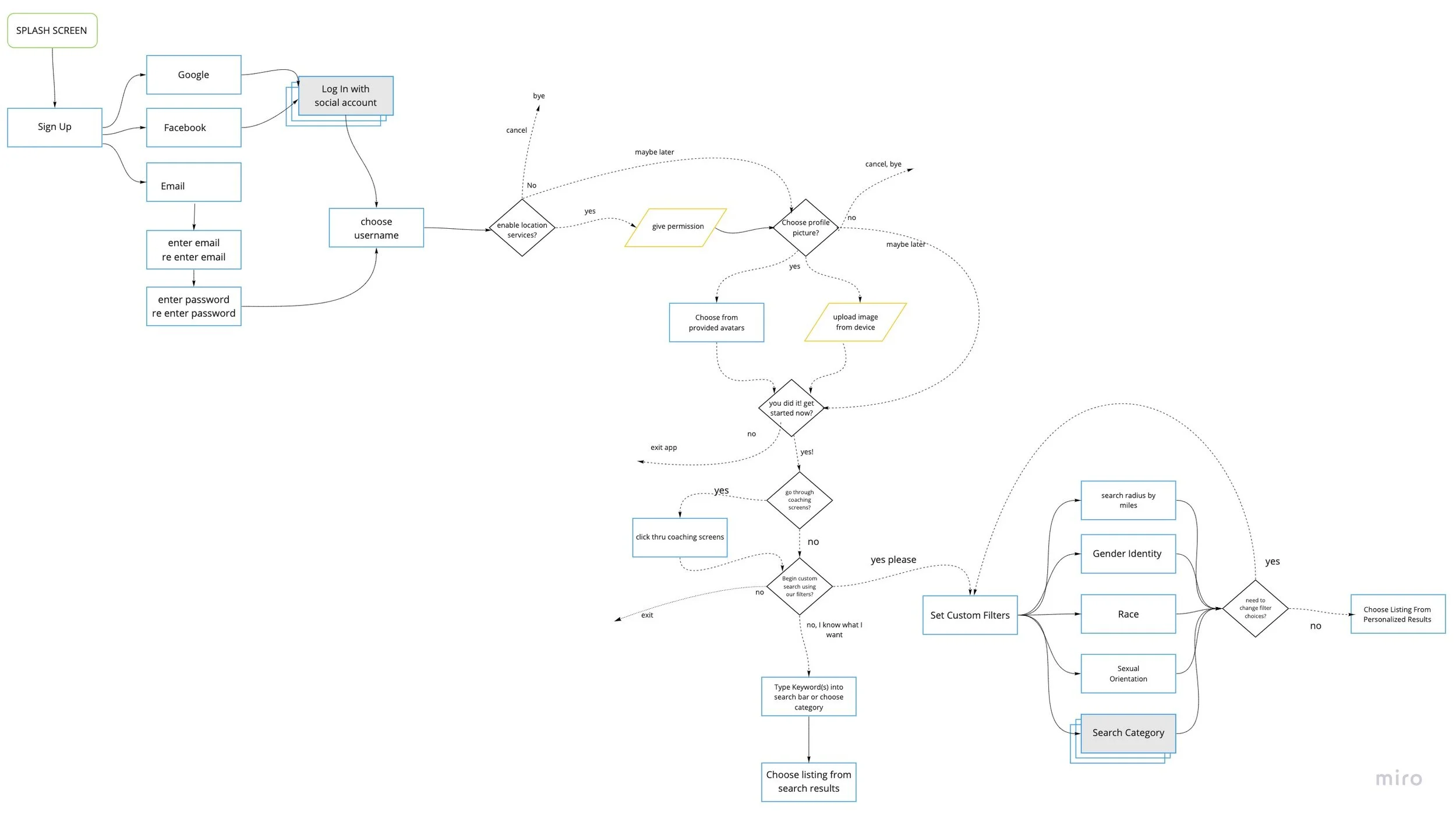
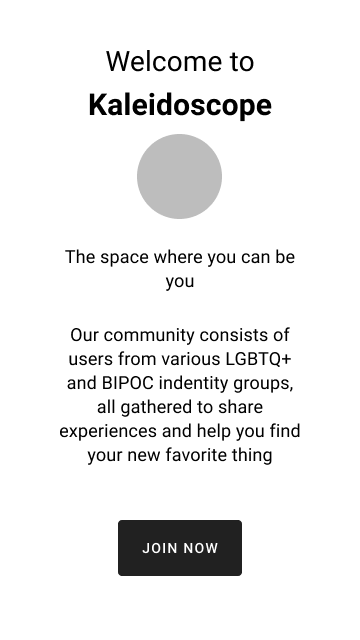
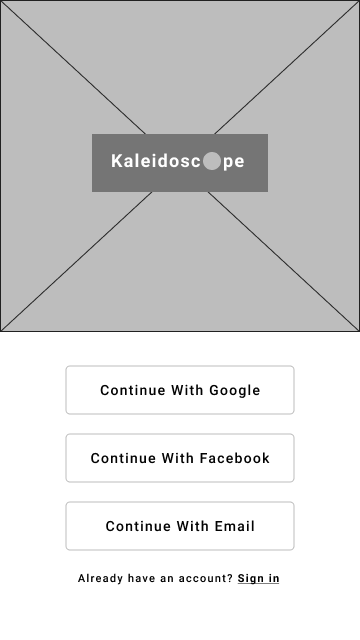
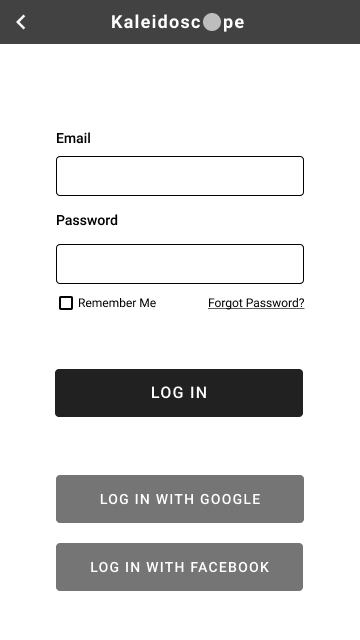
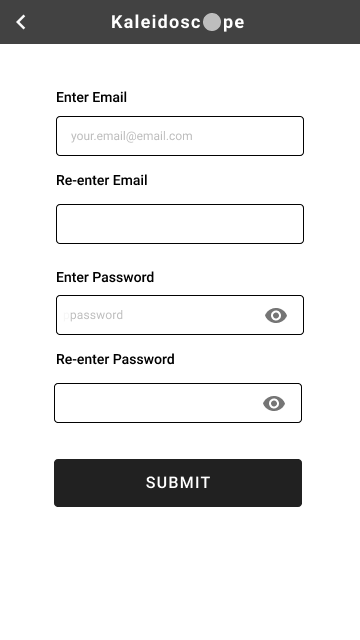
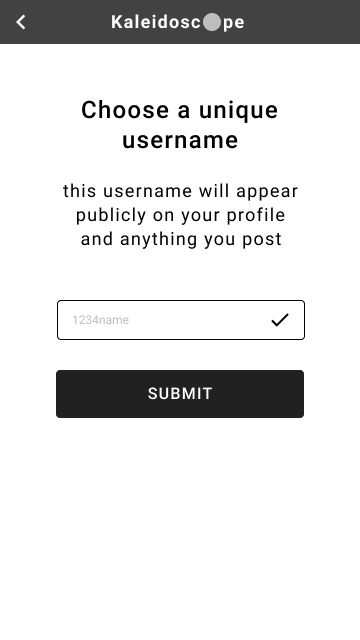
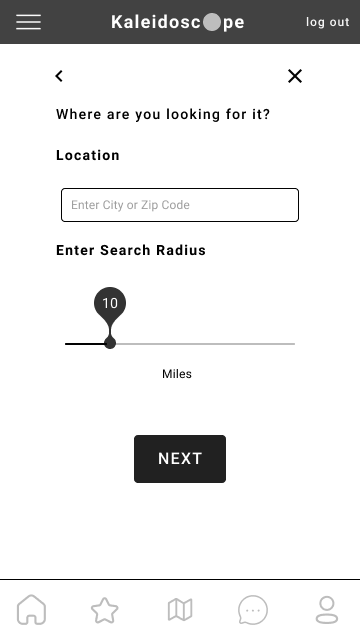
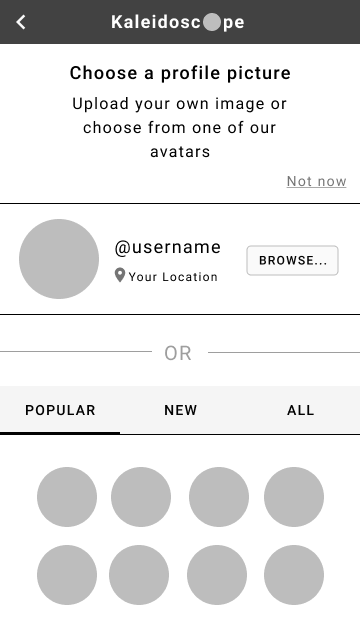
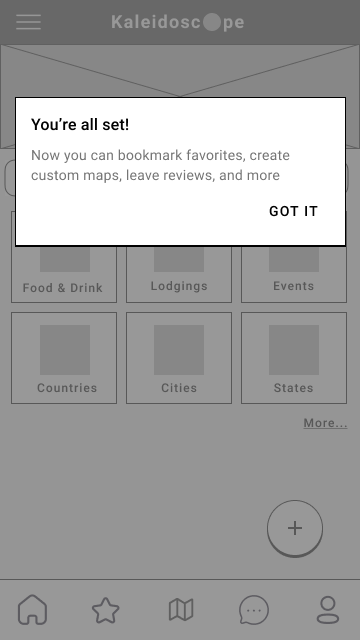
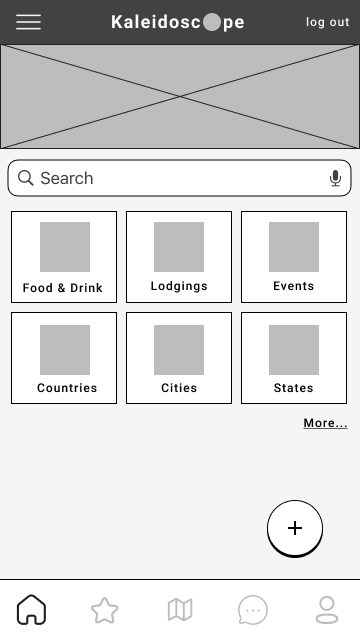
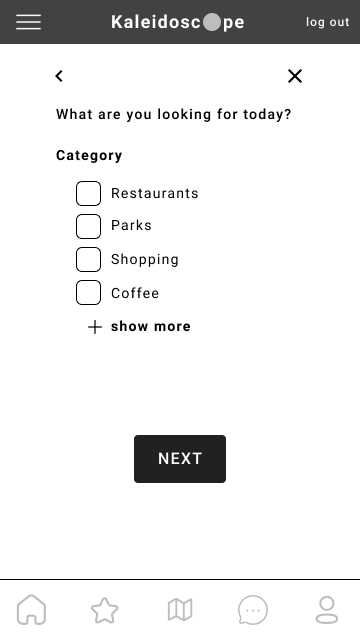
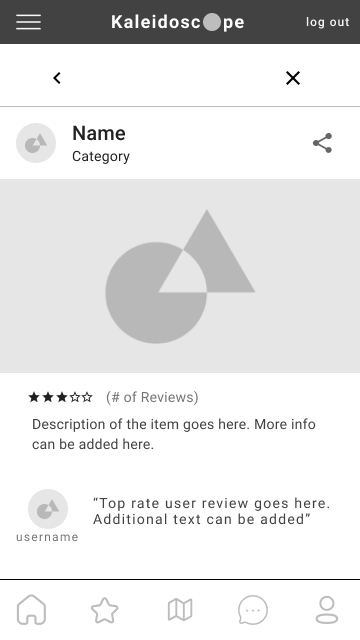
I sketched out user flows for onboarding and a custom search feature, then developed the flows into a low-fidelity prototype.
Testing
My main testing goals were to determine whether the flows and navigation I created felt natural to the user. Testing results told me that I had several navigation bugs to fix and that I needed to better identify the home screen. Users were getting confused during the transition from account creation to actually using the app features.
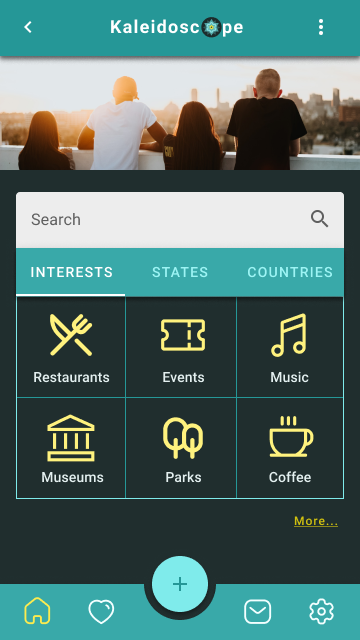
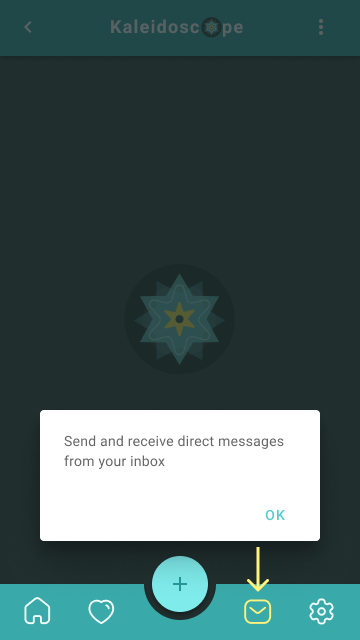
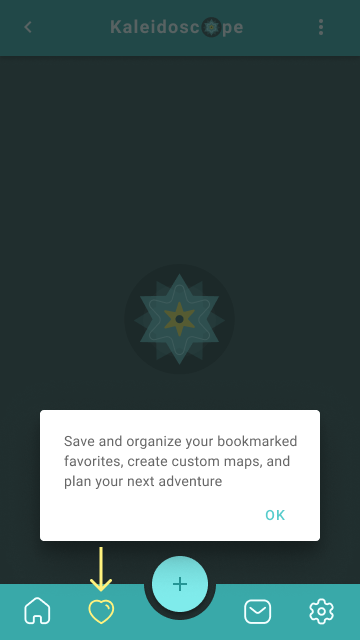
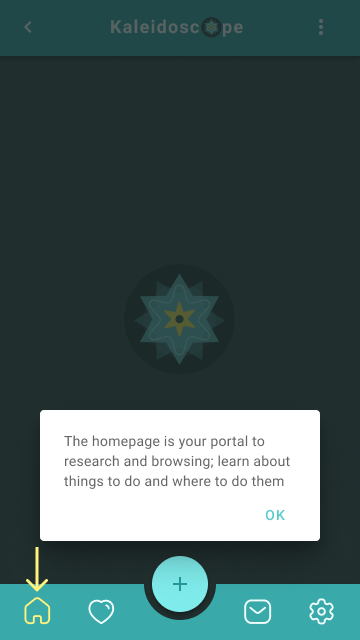
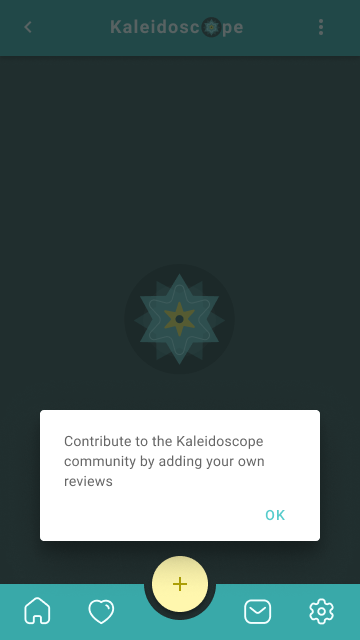
I iterated on my prototype by adding extra screens indicating onboarding success and tutorial tool tips before taking the user to the homepage. Once I was satisfied with the flows and had double checked my connections, I added visual style to bring my ideas into hi-fidelity.
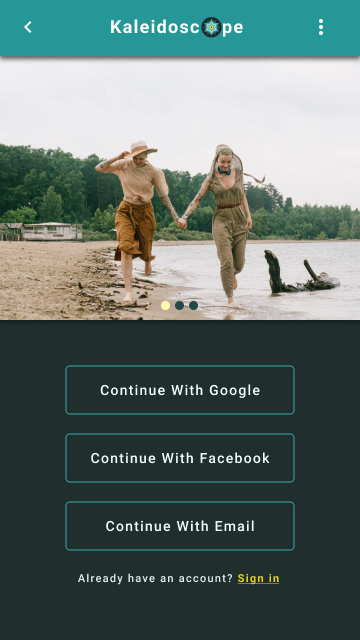
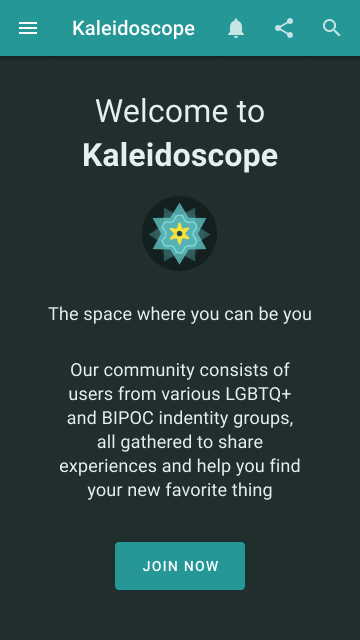
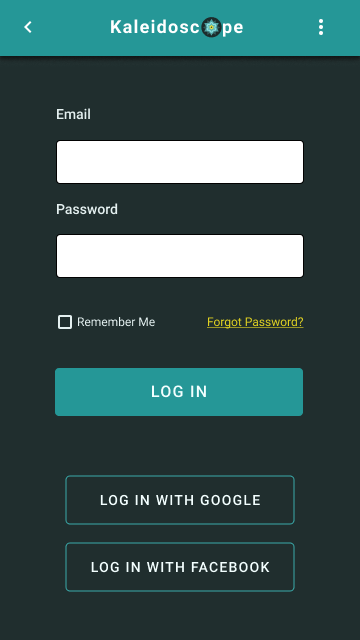
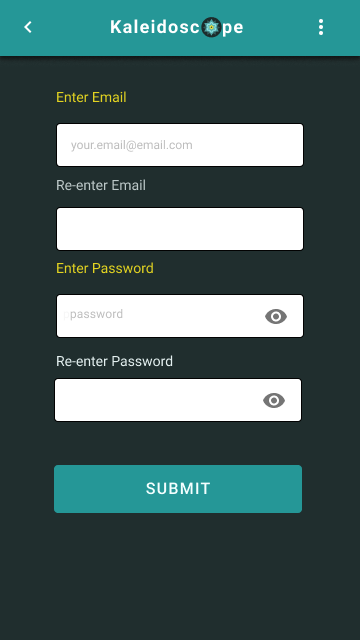
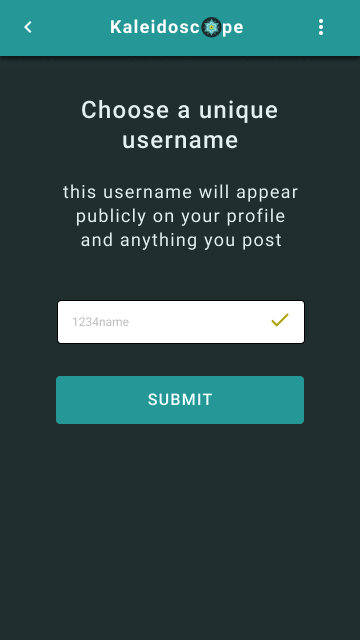
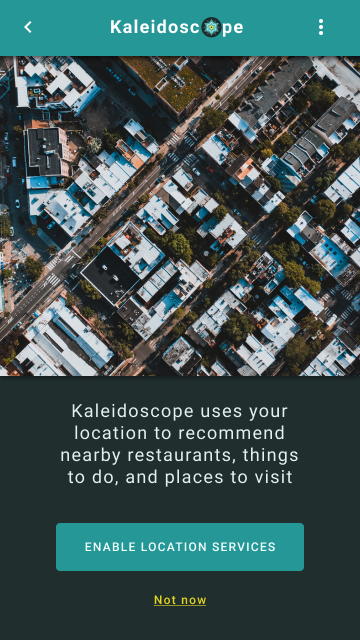
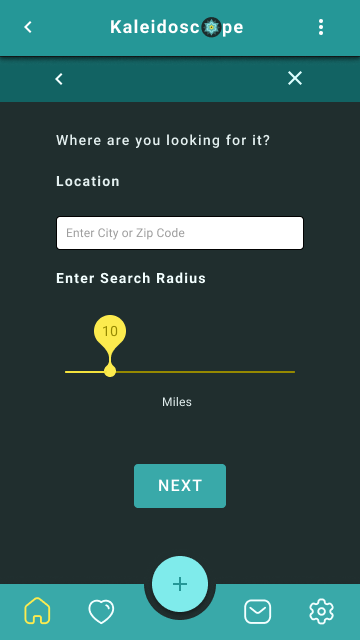
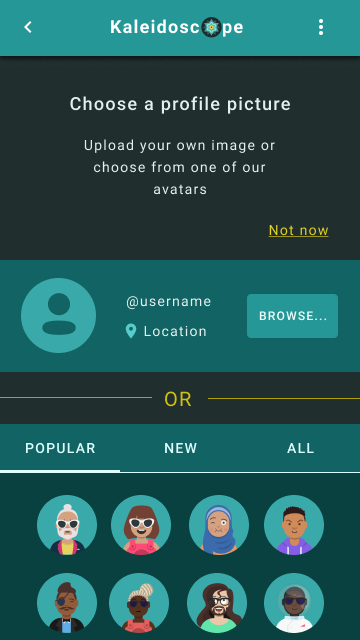
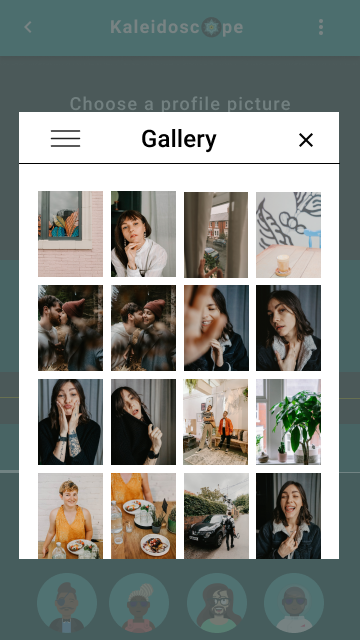
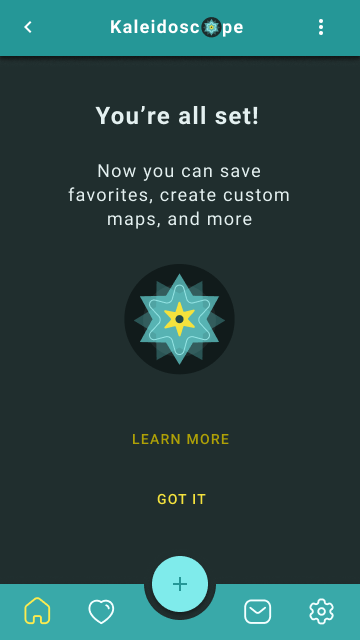
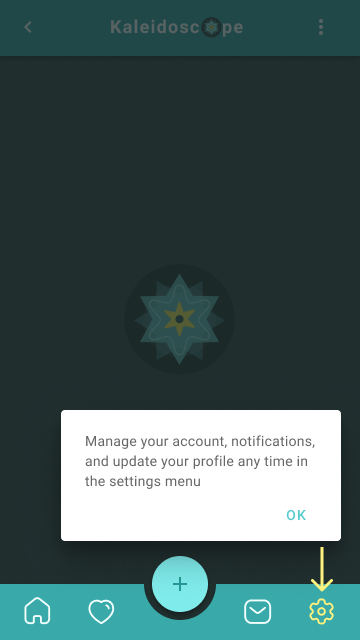
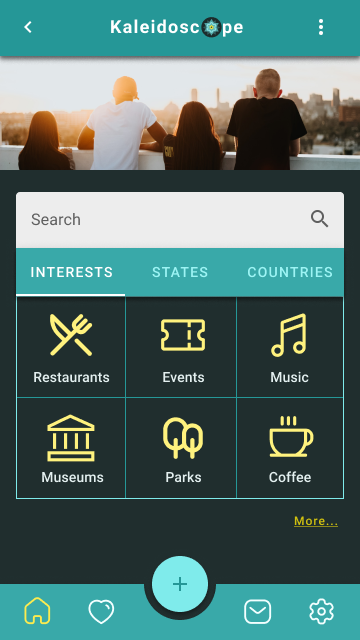
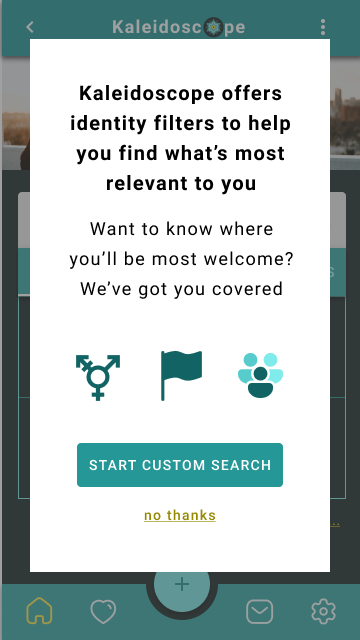
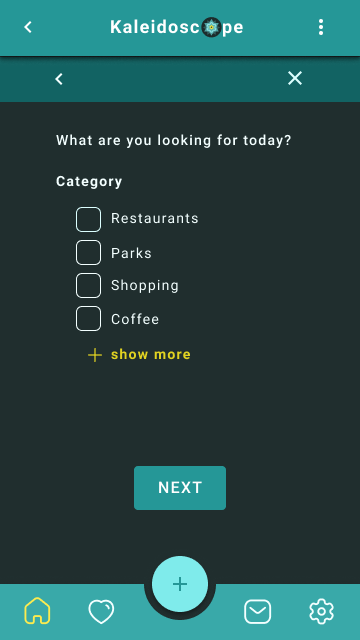
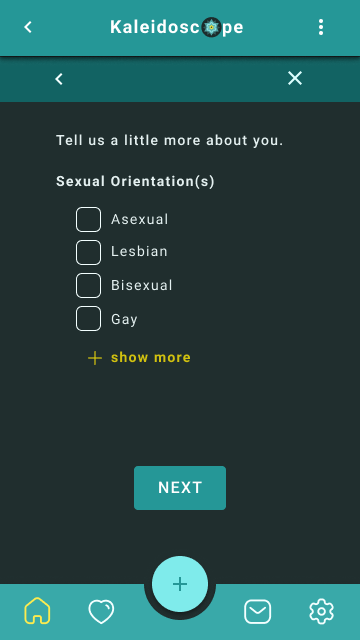
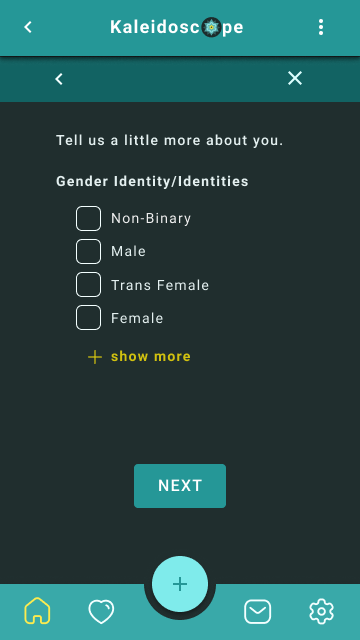
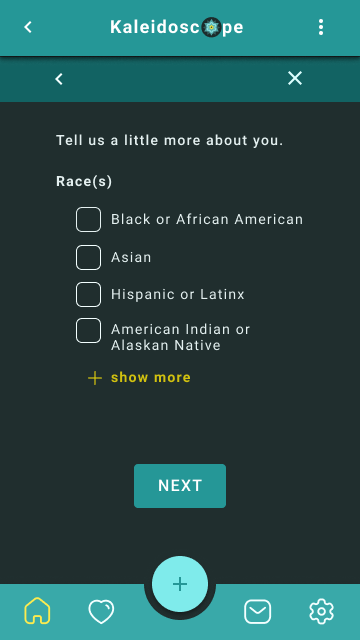
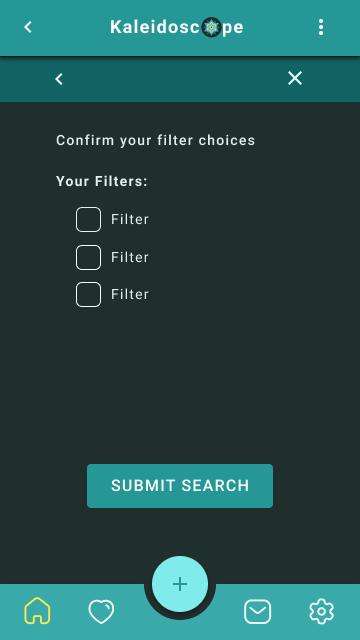
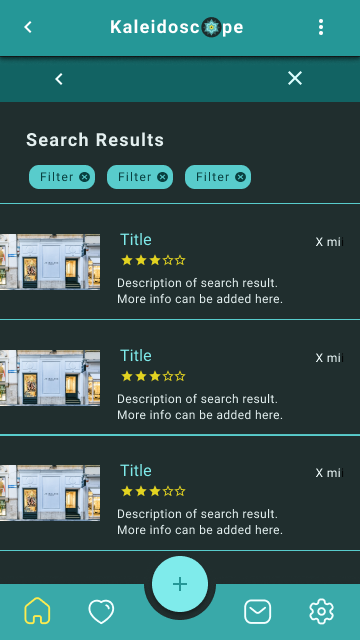
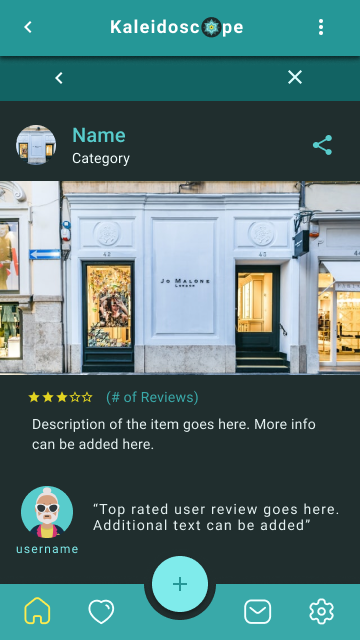
The most challenging part of this project was developing the final prototype; deciding on visual style and UI components, then applying those designs. My next step in development would be to go back to the research stage and conduct more user interviews. My interview participants were not as racially diverse as my target user segment would be, so I would want to hear from as many different identities as possible to pinpoint any other needs my prototype doesn’t address.